
Choosing the right water storage system is an important decision for residential, commercial, agricultural, and industrial applications. The available space, water requirement, installation conditions, accessibility, maintenance needs, and budget can all influence which type of tank is suitable.
Two common options are underground water tanks and above-ground water tanks. Underground systems, also known as below ground tanks or in ground tanks, are installed beneath the surface, while above-ground tanks remain accessible at ground level.
Both options can provide dependable water storage, but they have different advantages and practical considerations. Understanding these differences can help you select a system that fits your site and long-term water storage requirements.
What Are Underground Water Tanks?
Underground water tanks are storage systems installed below the ground surface. They can be used for storing water for domestic supply, industrial processes, fire protection, rainwater harvesting, irrigation, and other applications.
These systems are often selected where available land or floor space is limited. Since the tank remains below the surface, the area above it can potentially be used for other purposes, depending on the design and site conditions.
Below ground water storage tanks can be manufactured or constructed using different materials and configurations according to capacity, application, soil conditions, and project requirements.
An in ground water tank can be particularly useful for facilities where maintaining an open and unobstructed ground area is important.
Also Read: DM Water Full Form, DM Plant Full Form & What is DM Water?
What Are Above Ground Water Tanks?
Above-ground water tanks are installed on the ground or on a suitable supporting structure. Unlike underground systems, the tank body remains visible and easily accessible.
They are commonly used in factories, commercial buildings, agricultural facilities, residential properties, institutions, and other locations where sufficient space is available.
One of the biggest advantages of an above-ground system is accessibility. Inspection, cleaning, maintenance, and level monitoring can generally be carried out more conveniently because the tank is exposed.
However, the tank occupies usable surface space and may require a suitable foundation or support structure.
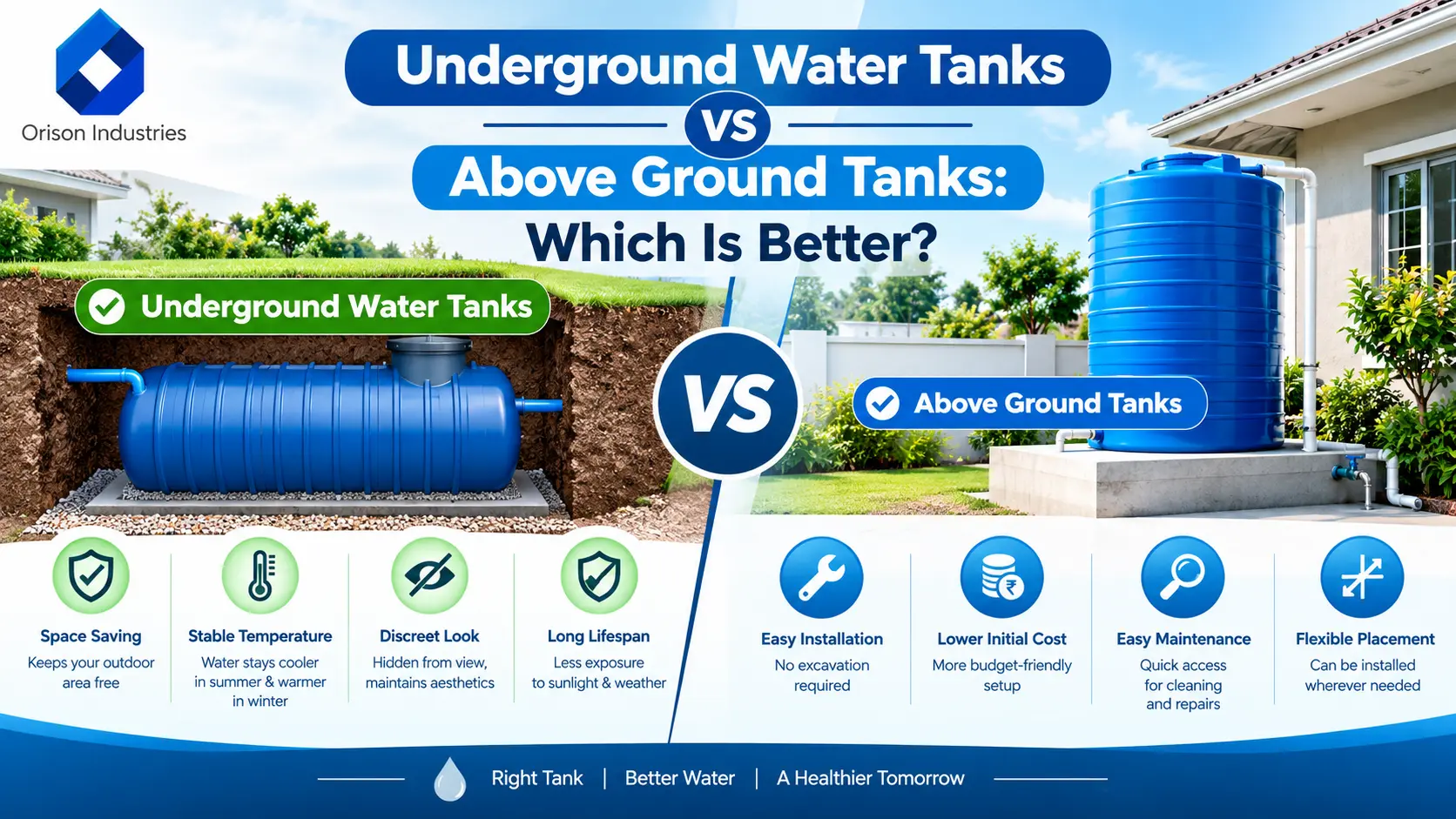
Underground Water Tanks vs Above Ground Tanks
The right choice depends on the conditions of the project rather than one option being universally better. Here are some of the main factors to consider.
1. Space Availability
Space is one of the most important considerations.
Underground systems can save valuable surface space because the tank is installed beneath the ground. This makes below ground tanks useful for sites where available land is limited or where the surface area is required for parking, landscaping, production, or other activities.
Above-ground tanks require dedicated space and may affect the layout of the facility.
2. Accessibility and Maintenance
Above-ground tanks generally provide easier access for inspection and maintenance. Components such as valves, connections, fittings, and external surfaces can be reached without excavation.
With below ground tank installations, maintenance access needs to be carefully planned during design. Access openings, inspection chambers, pumps, and associated equipment should be positioned appropriately.
Therefore, if frequent inspection and easy accessibility are major priorities, an above-ground system may be more convenient.
3. Protection from External Conditions
A tank installed below the surface is naturally surrounded by soil, which can provide a degree of protection from direct sunlight and external temperature fluctuations.
This can be useful for certain water storage applications. However, underground installation also introduces considerations such as groundwater pressure, soil movement, drainage, waterproofing, and structural loading.
Above-ground tanks are more exposed to weather conditions and sunlight, so the tank material, coating, insulation, and installation location should be selected accordingly.
4. Installation Requirements
Installing in ground water tanks requires proper site preparation. Excavation, foundation work, soil assessment, waterproofing, backfilling, drainage, and structural considerations may all be involved.
The installation process can therefore be more complex than simply placing an above-ground tank on a properly prepared foundation.
Above-ground installation is generally more straightforward, although the foundation and support system must still be designed to handle the filled tank’s weight safely.
5. Long-Term Maintenance
Both tank types can provide long-term service when properly designed, installed, and maintained.
For underground systems, maintenance planning is particularly important because the tank itself is not readily visible. Any leakage, structural issue, or external problem may require more detailed inspection.
For above-ground systems, visual inspection is easier, allowing potential problems to be identified more quickly.
Regular cleaning, inspection of fittings, checking water quality, and maintaining associated pumps and pipelines are important for either type of tank.
Where Are Below Ground Water Storage Tanks Used?
Below ground water storage tanks can be considered for a variety of applications where space management and concealed installation are important.
Common applications include:
- Rainwater harvesting systems
- Fire water storage
- Commercial buildings
- Residential developments
- Industrial facilities
- Agricultural water storage
- Institutional buildings
- Water reuse systems
- Emergency water reserves
For larger projects, the tank should be selected according to required storage capacity, water usage pattern, installation environment, and applicable engineering requirements.
Where Are Above Ground Tanks More Suitable?
Above-ground tanks can be a practical choice when sufficient land is available and easy access is important.
They are commonly used in manufacturing facilities, warehouses, farms, commercial buildings, schools, hospitals, and residential properties. They can also be easier to expand, inspect, clean, or modify when the site layout permits.
For industrial applications, above-ground storage can be especially useful when operators need convenient access to pumps, valves, level indicators, and other connected equipment.
Factors to Consider Before Choosing an In Ground Tank
If you are considering an in ground tank, look beyond its storage capacity. The following factors should be evaluated before installation:
Site Conditions: Soil type, groundwater level, drainage, and available installation depth can influence the design.
Required Capacity: Estimate daily consumption and emergency requirements before deciding the tank size.
Access: Inspection openings and maintenance access should be planned from the beginning.
Water Usage: Drinking water, process water, rainwater, irrigation water, and fire water may have different storage requirements.
Installation Cost: Excavation, civil work, transportation, installation, and associated piping can affect the overall project cost.
Future Requirements: Consider whether the water demand may increase in the future.
Which Tank Should You Choose?
There is no single answer to which system is better. The choice between underground and above-ground storage should be based on the specific requirements of the project.
An underground system can be a strong option when space saving, concealed installation, and better use of surface area are important. On the other hand, an above-ground tank may be preferable when easy inspection, convenient maintenance, and simpler installation are higher priorities.
A properly designed below ground water storage tank can provide an efficient storage solution when site conditions support underground installation. Similarly, an above-ground system can deliver reliable storage with easier accessibility when sufficient space is available.
Conclusion
Both underground and above-ground water storage systems have their own advantages. Below ground tanks can help utilize limited surface space and keep the storage system concealed, while above-ground tanks generally offer easier access and maintenance.
Before selecting an in ground water tank, it is important to consider soil conditions, groundwater, installation requirements, capacity, accessibility, and the intended application. For above-ground systems, available space, foundation requirements, exposure to weather, and maintenance access should be evaluated.
The best solution is ultimately the one that matches the site’s physical conditions, water storage requirements, operational needs, and long-term maintenance plan. A properly selected and engineered storage system can provide dependable water availability while making efficient use of the available space.